
How BMJ Global Health underpinned WHO and UNICEF’s first community hand hygiene guidelines
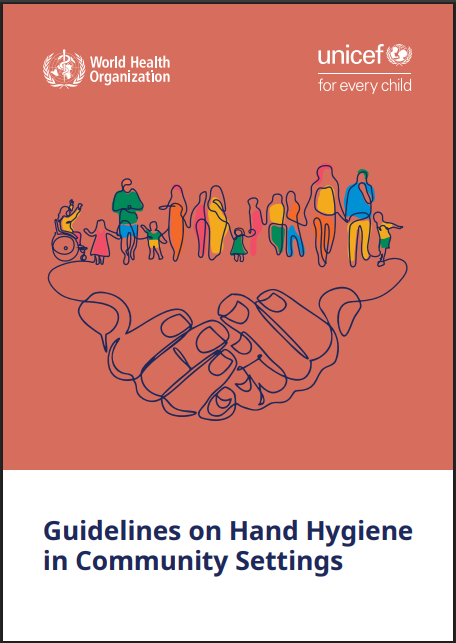
In October 2025, BMJ Global Health published an open access supplement, The evidence to establish global guidelines on hand hygiene in community settings. The collection brings together five systematic reviews and forms the evidence base for the World Health Organization (WHO) and UNICEF’s first global Guidelines on Hand Hygiene in Community Settings.
Launched on Global Handwashing Day, the guidelines were announced in a WHO news release, in which WHO states that they translate the best available evidence published in BMJ Global Health into ready-to-adapt actions for governments and health systems worldwide.
The BMJ Global Health supplement brings together a uniquely broad evidence base on community hand hygiene, spanning behavioural drivers, intervention design, and material and infrastructure requirements. Handwashing with soap and water can reduce the risk of diarrhoeal disease by around 30% and acute respiratory infections by approximately 17%. These two conditions together account for an estimated 740,000 preventable deaths annually.
For Joanna Esteves Mills, global public health consultant and coordinator of the WHO’s guideline development process, the supplement is central to building the evidence base for the new guidelines. Her work on hand hygiene spans WaterAid, the London School of Hygiene and Tropical Medicine and WHO.
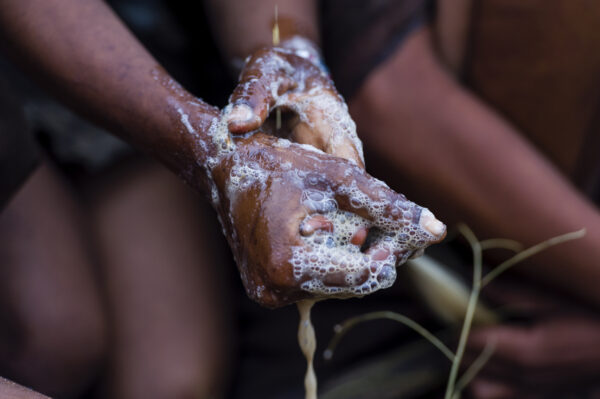
Through her professional experience, Mills describes seeing “many factors that act as a barrier to hand hygiene”, from basic material shortages to “slightly less tangible kind of stickier things around social norms”.
She also notes that “without the really basic things like water and soap, it’s not possible to practise hand hygiene”, and that the reviews confirmed this consistently.
Mills emphasises the importance of understanding behavioural drivers, describing the review on what shapes behaviour and the review on how those insights have been used to design interventions.
[“These reviews are] really interesting… they were just huge bits of work… for us to be able to draw conclusions from that was really valuable.”
Mills explains that each review covered “a specific pillar of interest”, creating a coherent set of evidence that governments could use without fragmentation. The supplement provided “the best available evidence” needed for a global guideline process. It offers a single open access source that governments can use when developing or adapting hygiene standards.
Targeted explicitly at governments, the guidelines are designed to support policy adoption and implementation at system level. The underpinning systematic reviews identified 75 government measures that affect hand hygiene.

“When you talk about how we might support countries to adopt and adapt the new guidelines, it’s really focusing on that role of government, which comes down to the policy environment, to legal and regulatory frameworks, to ensuring that there’s sufficient financing allocated, robust institutional arrangements, fit-for-purpose monitoring frameworks.”
This reflects how the guidelines frame hand hygiene as a government responsibility requiring coordinated policy, financing, and monitoring.
“Hand hygiene shouldn’t be thought of as a vertical programme of work… We can attach it to other relevant areas, whether it’s broader infection prevention and control programmes or broader programmes on school and child wellbeing.”
Joanna Esteves Mills
Global public health consultant and coordinator of the WHO’s guideline development process
Integration into policy frameworks
Mills describes how WHO is integrating the guidance into existing commitments across water, health and education. She gives the example of the European Protocol on Water and Health, a legally binding agreement aimed at protecting human health and wellbeing, including through preventative interventions such as hand hygiene.
“By virtue of being at that [regional government meeting under the WHO European Region’s Protocol on Water and Health] meeting and presenting on the guidelines and having side meetings with governments, we’re able to shine a spotlight on the guidelines and on the evidence base that they come from, and encourage adoption that way.”
A model for future guideline processes
Mills describes the coordinated BMJ Global Health publication model as “brilliant, really efficient and streamlined” and added that it “enabled us to maintain our timelines and publish on Global Handwashing Day… we couldn’t have done that otherwise.”
Mills is clear that publishing with BMJ Global Health strengthened the credibility and reach of the work: “It’s a very highly regarded journal, and we felt incredibly lucky. It’s been really positive.
“If anyone ever asks me within WHO, if I have any suggestions for how to do things, BMJ Global Health will be my first recommendation.” Joanna Esteves Mills, global public health consultant
Impact of the BMJ Global Health supplement
Related posts
-
 Practical lessons for publishers
 -
 Exposing hidden influence in infant feeding advice
 -
 How Ugandan research shaped covid-19 treatment
 -
 BMJ Group unveils 2025 impact report, spotlighting global health influence and policy reach
