
A sustained reduction in a high-risk population
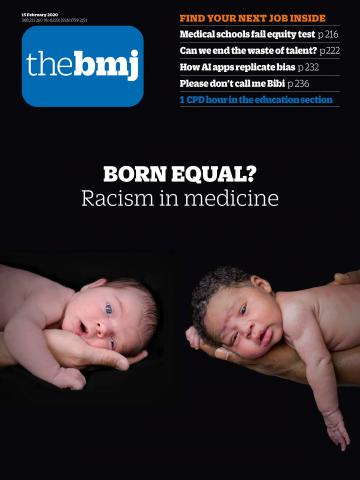
In February 2020, The BMJ highlighted racial discrimination and health inequalities in a special ‘Racism in medicine‘ issue¹ that helped catalyse the creation of the NHS – Race and Health Observatory.² In response to persistent ethnic inequalities in maternal and neonatal outcomes, the NHS – Race and Health Observatory, in partnership with the Institute for Healthcare Improvement and supported by the Health Foundation, established a national Maternal and Neonatal Learning and Action Network (LAN) to apply an anti-racism lens to quality improvement across 10 teams from eight Integrated Care Systems in four regions across England.³
Lancashire Teaching Hospitals NHS Foundation Trust was one of the participating sites. There, continuous improvement clinical fellow Jennifer Carroll, consultant midwife Jo Goss, and colleagues focused on reducing inequalities in post-partum haemorrhage (PPH).
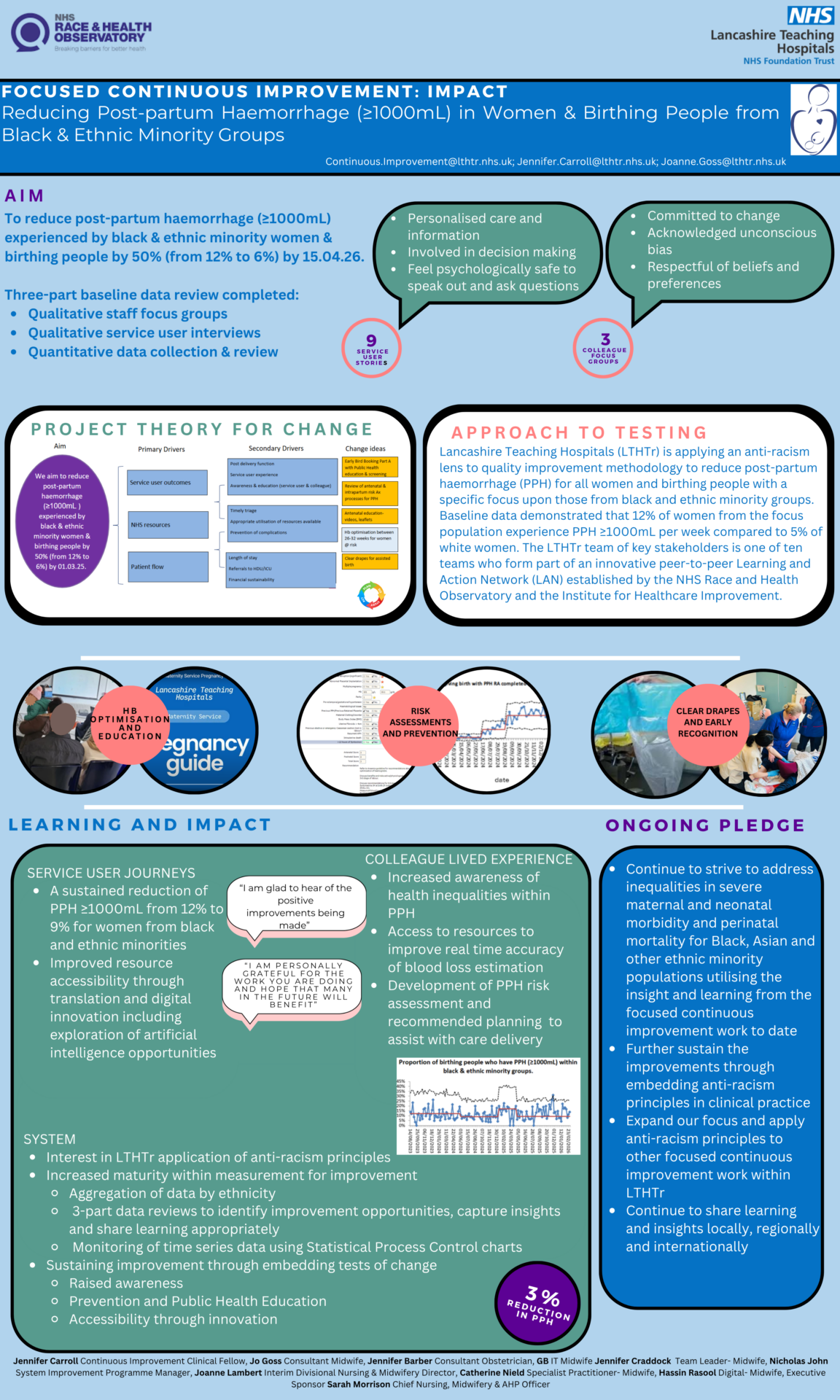
Baseline data revealed a substantial equity gap. Women and birthing people from Black and ethnic minority groups experienced PPH (≥1000mL) at more than double the rate of white and birthing women (12% versus 5%). To address this disparity, the team combined disaggregated data analysis with service user insight and staff lived experience, applying an explicit anti-racism lens throughout the improvement programme. Nine service user stories and three staff focus groups informed the work, ensuring that changes reflected lived experience as well as clinical evidence.
The team introduced earlier preventive intervention through redesigned “early bird” pathways, enabling screening, risk assessment, and support during the early stages of pregnancy. These changes were supported by strengthened clinical guidance, targeted staff training, and redesigned patient information. Through the national LAN, learning from the project was shared locally, regionally, nationally, and internationally.
The team achieved a sustained reduction in PPH rates from 12% to 9% among the population of focus, representing a 25% relative reduction.¹ Central to this progress was a cultural shift that enabled teams to discuss bias and inequality openly and create psychologically safe environments for learning and improvement.
The work continues, with the team aiming to reduce PPH incidence further to 6% within the population group of focus. An anti-racism and health equity lens is now being embedded into routine practice, not only within maternity services but across the organisation through the Lancashire Improvement Method.
This project demonstrates how applying an anti-racism lens to quality improvement can uncover previously unrecognised inequalities, reduce disparities in outcomes, and embed equity into routine care delivery.
System impact
• 25% reduction in post-partum haemorrhage (12% to 9%), sustained over two years
• Equity gap identified and reduced from a baseline difference of seven percentage points
• Equity considerations embedded into routine care pathways and early intervention models
• Cultural change supporting open discussion of bias and inequality in care delivery
• Learning shared nationally through the NHS RHO Maternal and Neonatal Learning and Action Network

“A lot of the work at the start was about getting comfortable going into a really uncomfortable space. We had to recognise our own ethnicities and acknowledge that we were a team of predominantly white British clinicians leading this work.
We were selected because of our roles and skills, not our backgrounds, but that meant we had to be very deliberate. We had to create psychologically safe spaces to ask difficult questions, about whether racism exists, whether people had experienced it, and whether it had affected their care.
That meant being prepared to be challenged, both privately and publicly, on how we could lead anti-racism work. But without doing that groundwork: understanding our own position, listening properly, and being open, we wouldn’t have been able to move forward in a meaningful way.”
Jennifer Carroll
Continuous improvement clinical fellow; specialist physiotherapist, Lancashire Teaching Hospitals NHS Foundation Trust
Related posts
-
 Acting against racism for a healthier, more equal, world
 -
 Raising awareness of a rare but serious risk linked to menstrual cup use
 -
 Further evidence of developmental risks linked to epilepsy drugs in pregnancy
 -
 Epidurals not linked to increased harm for newborns or children
