
BMJ GROUP NEWS | 12 October 2026
Congratulations to Kamran Abbasi, editor-in-chief of The BMJ, and former BMJ Group non-executive director Kiran Patel, who are among 75 influential Black, Asian and minority ethnic people in health recognised by the Health Service Journal (HSJ). Their inclusion in HSJ’s 2026 list, recognises their significant contributions to healthcare leadership, policy and practice.
The list also features several healthcare leaders who have contributed to BMJ Group’s work, with congratulations also going to Lord Victor Adebowale, Lord Ara Darzi, Professor Habib Naqvi, Professor Mahendra Patel and Professor Stella Vig.
Their contributions span clinical research, healthcare leadership and policy, including The BMJ Commission on the Future of the NHS, which brought together experts to examine the challenges facing the health service and develop recommendations for its future. Lord Adebowale was one of the commission’s three independent chairs, while Kiran Patel, Mahendra Patel and Stella Vig were among its members.
From evidence to impact: tackling racial inequalities in healthcare
The recognition also provides an opportunity to reflect on the impact of The BMJ‘s work to address racial inequalities in healthcare.
In February 2020, The BMJ published a special issue on racism in medicine, co-edited by Lord Victor Adebowale and Professor Mala Rao. The issue called for a national observatory to tackle ethnic inequalities in health, helping to bring about the establishment of the NHS Race and Health Observatory later that year.
Photographs from BMJ Group’s archives capture the launch event and discussions that helped build momentum for change.


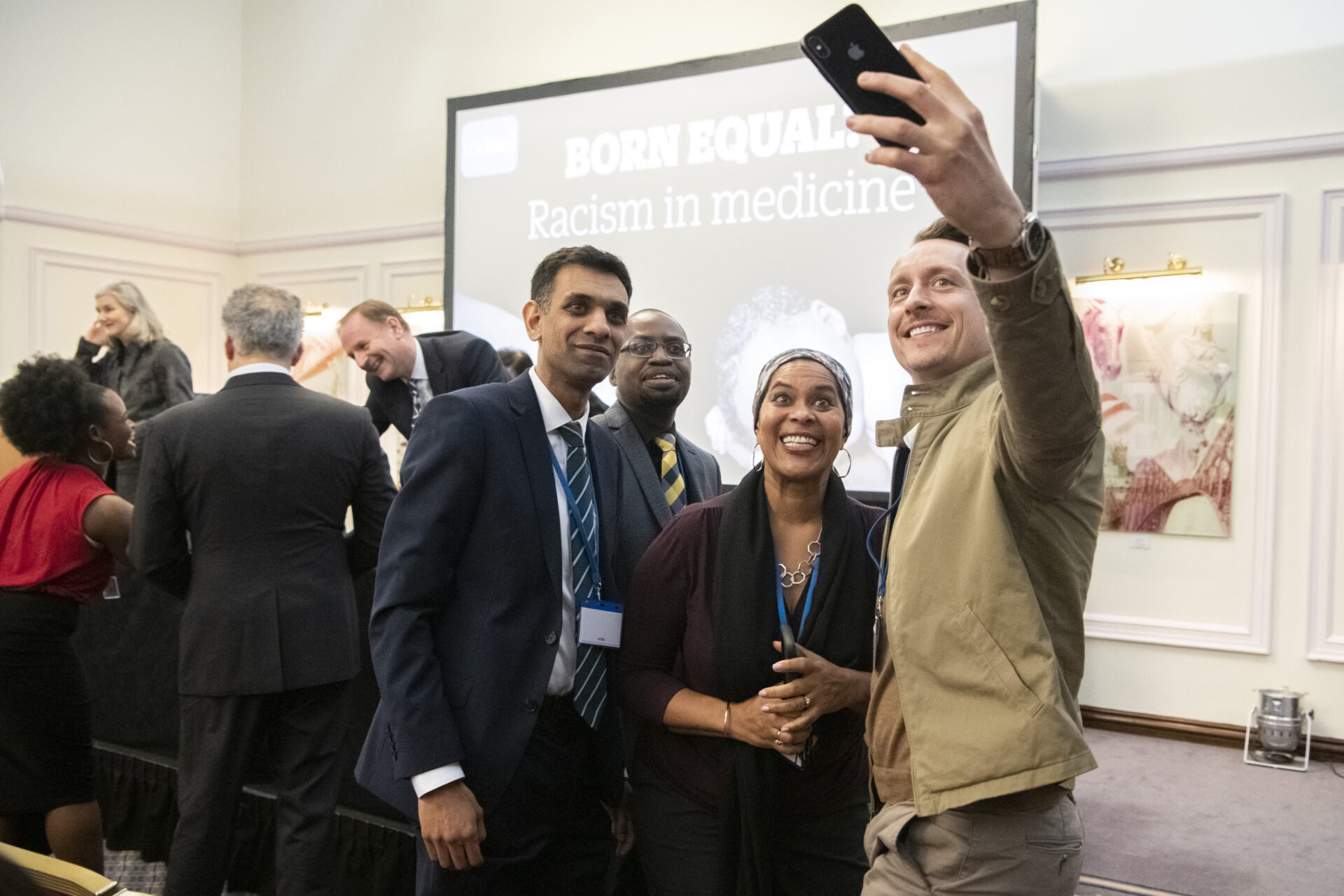
Six years on, the Observatory, led by Professor Habib Naqvi, continues to translate evidence into action. As highlighted in BMJ Group’s 2026 impact report, its research has contributed to updated national guidance on pulse oximetry, more inclusive genetic testing for chemotherapy treatment and efforts to reduce inequalities in maternity care.
These developments demonstrate how independent medical journalism, research and collaboration can contribute to changes in health policy and clinical practice.

Related posts
-
 Practical lessons for publishers
 -
 Building a powerful advocacy voice
 -
 Exposing hidden influence in infant feeding advice
 -
 Geopolitics of global health: New BMJ collection
